Signs That Speak to Everyone: Why ADA Signs Matter More Than You Think
ADA signs play a critical role in creating spaces that are inclusive, accessible, and legally compliant. Required under the Americans with Disabilities Act (ADA), these signs are designed to ensure that people with disabilities—particularly those who are blind or visually impaired—can navigate public and commercial spaces safely and independently. ADA signs are commonly used for restrooms, exits, room identification, stairwells, elevators, and wayfinding throughout buildings. While they may appear simple at first glance, ADA signs follow very specific guidelines related to size, placement, contrast, tactile lettering, and Braille, making them far more technical than standard signage. 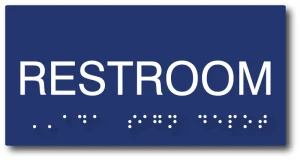
One of the most important reasons ADA signs matter is accessibility. For many individuals, these signs are not just helpful—they are essential. Raised characters and Braille allow people to read signs through touch, while high-contrast colors improve readability for those with low vision. Properly placed ADA signs provide consistency and predictability, helping users understand their surroundings without confusion. When ADA signage is missing or incorrect, it can create barriers that limit independence and safety.
Beyond accessibility, ADA signs are also a matter of legal compliance. Businesses, offices, healthcare facilities, schools, and public buildings are required to meet ADA standards. Non-compliant signage can lead to failed inspections, costly fines, legal action, or forced replacements. Investing in properly designed ADA signs from the start helps businesses avoid unnecessary risk while demonstrating a commitment to inclusivity and responsibility.
This is where the importance of a professional sign maker becomes clear. ADA signage is governed by detailed regulations that cover everything from font style and character height to Braille spacing and mounting height from the floor. A professional sign maker understands these requirements and ensures that every sign meets current ADA standards. They stay informed about regulation updates and apply precision during both design and production, reducing the risk of errors that could render a sign non-compliant.
Phoenix Professional Sign maker also play a vital role in design and material selection. ADA signs must balance functionality with aesthetics, especially in environments such as offices, hotels, or retail spaces where branding matters. A skilled sign maker can incorporate brand colors, finishes, and materials—such as acrylic, metal, or wood—while still maintaining required contrast and legibility. The result is signage that blends seamlessly into the environment without sacrificing compliance. For more information you can visit us at https://www.phoenixsigncompany.org/reviews/
Installation is another critical factor. ADA guidelines specify exact placement locations, including height, side-of-door positioning, and clearance from obstacles. A professional sign maker ensures signs are installed correctly, securely, and consistently throughout a space. Improper installation, even with a correctly designed sign, can still result in non-compliance.
Ultimately, ADA signs represent more than just regulatory requirements—they reflect a commitment to inclusion, safety, and equal access. When designed, produced, and installed by an experienced sign maker, ADA signs help create environments that welcome everyone while protecting businesses from legal and operational challenges. Thoughtfully executed ADA signage sends a clear message: accessibility is not an afterthought, but a priority.
